
Polished Concrete Flooring in Northeast Ohio
Polished concrete is the floor for people who love the industrial, minimalist look of bare concrete but want it refined, sealed, and easy to maintain. Instead of applying a coating on top of your slab, we mechanically grind and polish the concrete itself in progressive steps until it reaches a smooth, reflective finish — durable, low-maintenance, and completely unique to your existing floor.
What Is Polished Concrete?
Polished concrete is a mechanical process, not a coating. Using diamond-impregnated grinding tools, we work through progressively finer grits to grind down the surface of your existing slab, densify it with a penetrating hardener/sealer, and bring it to a smooth, glossy, or satin finish — depending on the level you choose. Because there’s no topical coating layer, there’s nothing sitting on top of the concrete that can eventually peel, chip, or delaminate.
Our polished concrete process includes:
- Concrete repair — filling cracks, spalls, and surface imperfections before grinding begins
- Progressive diamond grinding — working through multiple grit stages to achieve a smooth, even surface
- Densifier/hardener application — a penetrating chemical treatment that hardens and strengthens the surface from within
- Final polish — bringing the surface to your chosen sheen level, from a satin finish up to a high-gloss shine
- Optional protective sealer for added stain resistance in high-use environments

Polished Concrete vs. Epoxy Coatings
This is the most common question we get, so let’s address it directly.
Polished concrete works with your existing slab rather than covering it. There’s no coating to eventually peel or wear through, because you’re not adding a separate material layer — you’re refining the concrete itself. It has a more subtle, natural, architectural look, and it holds up extremely well to heavy foot and wheel traffic over time. The tradeoff is fewer color and design options compared to epoxy, since you’re limited to the color and character of your existing concrete (with the option of applying a concrete dye beforehand).
Epoxy and polyaspartic coatings (like our flake, quartz, metallic, and solid color systems) give you far more design flexibility — colors, patterns, metallic effects, logos — and typically a higher-gloss, more decorative look. Because they’re a topical coating, they do require a properly ground surface and quality topcoat to hold up long-term, which is exactly why we use UV-stable polyaspartic topcoats on all of our coating systems.
Neither option is objectively “better” — it comes down to the look you want and how you plan to use the space. We’ll walk you through both during your free quote.
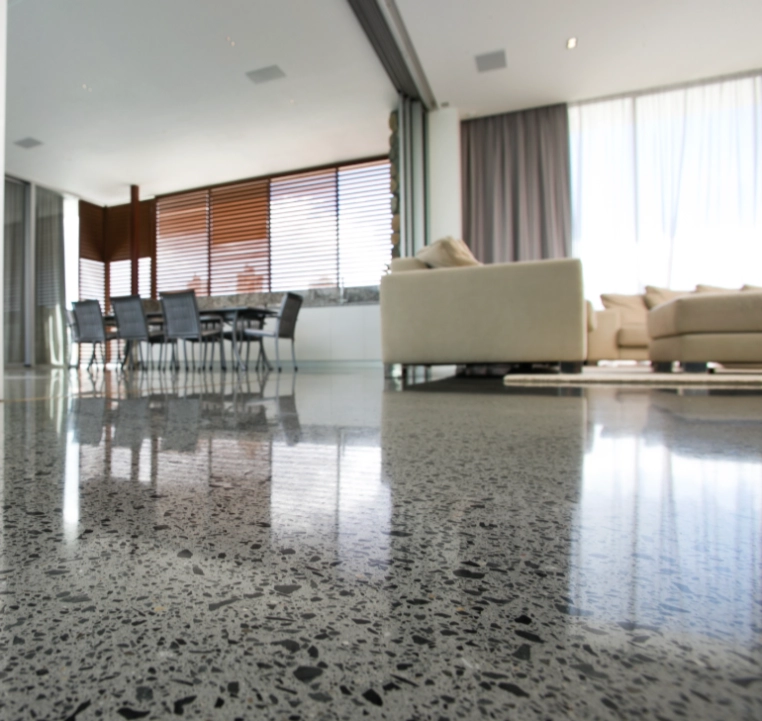
Where Polished Concrete Works Best
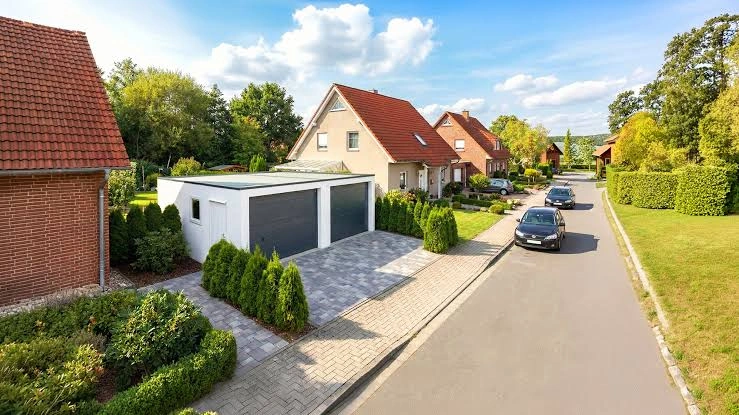
Residential garages
for homeowners who want a clean, durable, low-maintenance floor without a decorative coating.
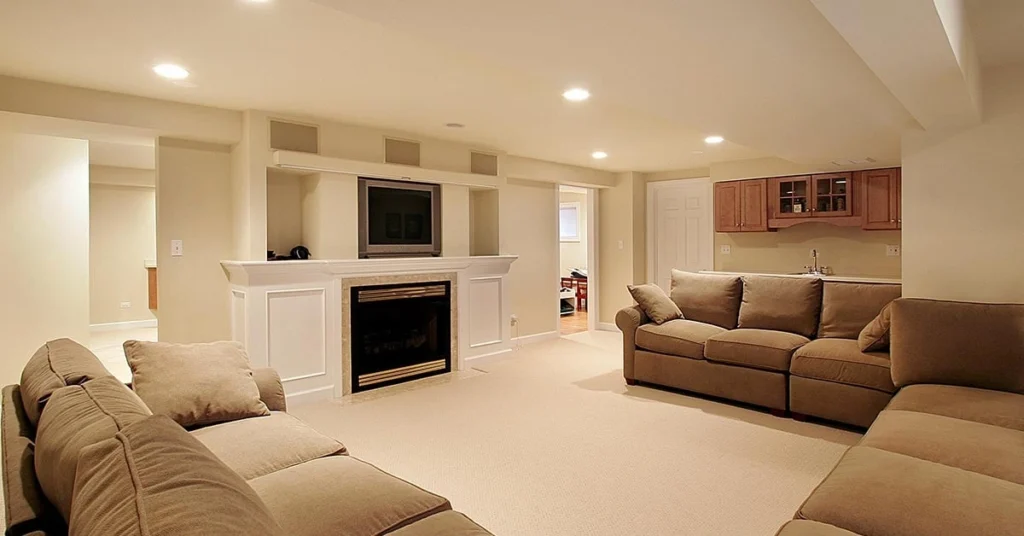
Basements
where a modern, industrial-chic aesthetic fits the design.
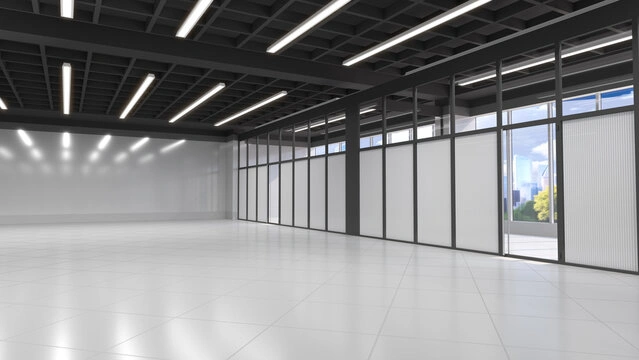
Commercial and retail spaces
warehouses, showrooms, restaurants, and offices — where polished concrete delivers a sleek, professional look with minimal ongoing maintenance and strong durability under heavy foot traffic.

Any space with an existing slab in good structural condition
that doesn’t need (or want) a decorative coating system.
Our Polished Concrete Process
Free Quote & Assessment
We evaluate your existing slab’s condition and discuss sheen level and finish options.
Concrete Repair
Cracks and surface damage are repaired before grinding begins.
Progressive Diamond Grinding
We grind through multiple grit stages, gradually refining the surface.
Densifying Treatment
A penetrating hardener strengthens the slab and improves its resistance to moisture and abrasion.
Final Polish & Optional Sealer
The floor is brought to your chosen finish level and sealed for extra protection if desired.
Polished Concrete vs. a Simple Concrete Sealer
A basic concrete sealer is a thin, topical product rolled onto an unground slab — it offers minimal protection and needs to be reapplied every couple of years as it wears. Polished concrete is a true mechanical transformation of the slab itself, combined with a penetrating densifier, resulting in a genuinely harder, more durable, and more refined surface that requires far less ongoing maintenance.
Our 25-Year Adhesion Warranty
Because polished concrete is a mechanical process rather than a topical coating system, our standard adhesion warranty (which covers peeling, delamination, and blistering) doesn’t apply the same way it does to our coated floors — there’s no separate coating layer to delaminate. Any protective sealer applied as part of your polished concrete finish is covered by the manufacturer’s product warranty, details of which we’ll provide at the time of installation. We’re happy to walk through exactly what’s covered for your specific project during your free quote.

Caring for a Polished Concrete Floor
Sweep or dust mop regularly to remove grit that can dull the shine over time
Damp mop with a neutral pH cleaner as needed — avoid acidic or ammonia-based products, which can damage the surface
Wipe up spills promptly, especially oil, chemicals, or anything acidic
Resealing may be recommended periodically in high-traffic commercial settings, depending on use
No waxing required — polished concrete gets its shine from mechanical grinding, not a topical wax layer
Frequently Asked Questions
How long does polished concrete last?
Polished concrete is extremely long-lasting because you’re working with the concrete itself rather than a topical layer — a well-maintained polished floor can last for decades with only periodic resealing in high-traffic areas.
Is polished concrete slippery?
A properly polished floor is generally no more slippery than any other smooth, hard flooring surface, and we can adjust the final sheen level or add a slip-resistant sealer for areas where traction is a priority.
Can polished concrete be done on any garage floor?
Most existing slabs in reasonably good structural condition are good candidates. Slabs with significant cracking, heaving, or contamination may need repair or an alternative approach, which we’ll assess during your free quote.
How much does polished concrete cost?
Cost depends on square footage, current slab condition, and the level of polish and sheen you choose. We provide a free, on-site, written quote for every project.
What’s the difference between polished concrete and an epoxy coating?
Polished concrete refines your existing slab mechanically with no added coating layer, offering a more subtle, industrial look and long-term durability. Epoxy and polyaspartic coatings add a topical, decorative layer with far more color, pattern, and design flexibility. Both are durable options — the right choice depends on the look and function you want.
Does polished concrete need to be resealed?
Residential floors typically need little to no resealing under normal use. Higher-traffic commercial spaces may benefit from periodic resealing to maintain stain resistance and sheen.
Ready for a floor nobody else has?
Call 440-732-3977 for your free quote.